- Oct 22, 2025
Are You One of the New Wellness Seekers?
- Rachel Bulkley
- 0 comments
How Erich Fromm predicted our modern malaise—and what it means to become fully alive again.
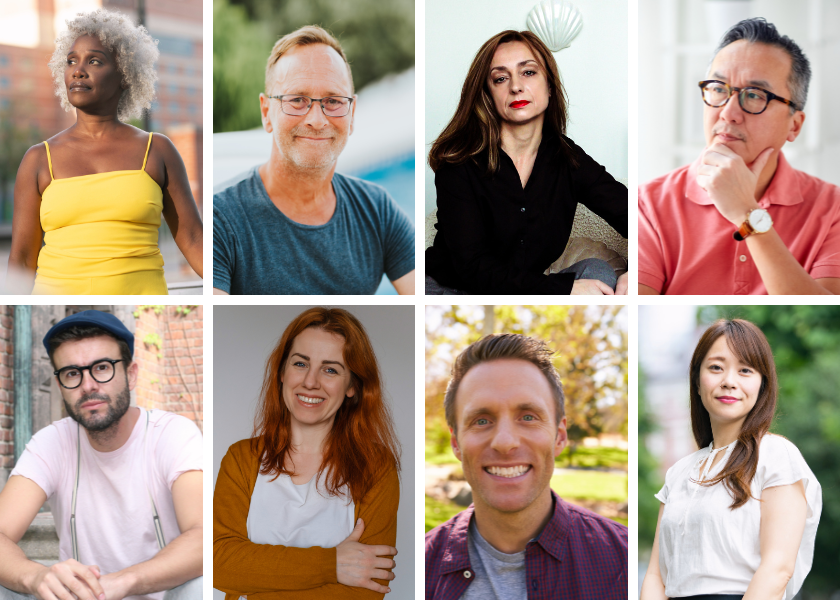
“Humans, you fool! Can’t you see everyone needs well-being?”
For years, as I’ve worked on this project, I’ve been asked who my target demographic was. Every time I was asked that, something in me recoiled. I wanted to snap that line.
Whenever I would explain the project for the first time, I would talk about teaching this content to incarcerated violent offenders. I wanted to quickly establish that I wasn’t a typical wellness coach, I wasn’t amping good vibes and prescribing farmer’s market produce. I was teaching something that addresses the grit of real life.
Since everybody’s life is real, of course this is for everyone.
I still believe that.
But there’s a reason business people talk about target markets. You have to start somewhere. I finally stopped resisting. I got it—it wasn’t about being exclusive—it was about realistically reaching people. Starting with one person at a time is how anything becomes possible. Or one kind of person.
So, I began to describe the people I hang out with. The places I go, the conversations I have, the ideas, activities, anxieties and ambitions I engage in my actual life, close up.
Two profiles emerged. The Successful Empties, and the Self-Aware Strivers.
The Successful Empties
Successful Empties are my friends who did all the things—got the education, the career, the partner, the house, the kids, the vacations, the stuff… But still, too often, in the middle of the night, the anxiety crawls in bed with them. They hate standing on the balcony of a resort in another gorgeous setting and wondering why they don’t feel full and content.
They talk to their therapist and make sense of some things, but it still doesn’t make life fully make sense.
They’re so busy, but they’re concerned that all this motion and activity isn’t adding up to what they hoped it would. And then what?
They look around at the world and recognize they are one of the lucky ones. They have privilege, they shouldn’t be so damned ungrateful, right?
The Self-Aware Strivers
The Self-Aware Strivers are the younger siblings of the Successful Empties. They took a few more adventurous chances. They did a gap year abroad and got a sense of the world from different perspectives. They let their ambition explore unconventional avenues. They committed to doing their inner work. They’ve learned to draw boundaries, to sidestep drama, to accept life’s plot twists with a bit of irony.
Between their willingness to choose fulfillment rather than just security, and the perfect conditions of economic wealth transfer in the last decades, they live in a continual balancing act financially. They know money isn’t everything, but they’re also worn out having to think about it.
For all the work they’ve done, it seems like life should make more sense and feel more established.
Both groups look around and see the unbearable bureaucracy and polarization that’s got society stretched to its limits like a body on a rack, beginning to have muscles and joints ripped from place. They often feel a quiet hysteria.
Sometimes they cry out, inside, online, or to peers. Sometimes they silence their worries with a glass of wine and a favorite vinyl, a podcast on nervous system regulation, or a few hours hiking.
If any of this sounds the least bit familiar, let me explain why you feel what you feel, and why you haven’t found a solution yet. I’ll also explain how and what it looks like to actually find what you’re not even sure you’re looking for.
Ever lie awake at 3am wondering why life feels hollow, or worrying about money when you technically make more than enough? Ever stand overlooking a beautiful vista and wonder why you feel flat?
Ever wonder why having a loving partner who’s into shadow work and kids who know how to articulate their boundaries still hasn’t added up to the life of your dreams?
Erich Fromm predicted your exact experience in 1968.
Fromm—psychoanalyst, social critic, brilliant mind—wrote a book called The Revolution of Hope that reads like he had a crystal ball aimed directly at your life. He looked at the trajectory of modern society and said, essentially: “If we keep going this direction, here’s what’s going to happen to human beings.”
Then he listed, with disturbing precision, every single thing you’re feeling right now.
The anxiety that won’t quit even though you did everything expected. The fact that you’re always busy but not sure what it’s all leading to. The suspicion that you’re performing your life rather than living it. The quiet hysteria when you look at the world around you. The exhaustion of constantly managing yourself and your life like a machine that needs optimization.
Fromm called all of it.
He explained exactly why it’s happening and what the remedy is.
His Diagnosis: You’ve Been Transformed from a Being into a Doing
Fromm’s core insight was simple and devastating: Modern society treats humans as instrumental resources rather than ends in themselves. You’re not valued for your personhood, your consciousness, your capacity for connection and meaning. You’re valued for your productivity, your efficiency, your ability to function smoothly in systems designed for maximum output. He wrote:
“Man, as a cog in the production machine, becomes a thing, and ceases to be human. He spends his time doing things in which he is not interested, with people in whom he is not interested, producing things in which he is not interested.”[1]
Mhmm.
Maybe you’re not literally on a factory floor. Maybe you have a great job title, autonomy, benefits, the full package. But what’s happening inside you during most of your workday? Notice the quality of your attention. Notice whether you feel fully present and engaged, or whether some essential part of you has checked out—going through motions, trying to get through it and into your own space-time.
That feeling never really quits, does it? Even leisure feels like another task to optimize. Even rest requires management. Even pleasure needs to be earned, scheduled, maximized.
This is what Fromm meant by the transformation from being to doing. We’ve become machines that do things rather than human beings who live.
Three Predictions That Came True
1. Complete mechanization and passive manipulation
He warned about “a totally organized and homogenized social system” where technology would be used not for human liberation but for behavioral control. Where people would be “easily within the reach of magnetic and attractive personalities effectively exploiting the latest communication techniques to manipulate emotions and control reason.”[1] (Say what, Mr. 1968??)
Look at your phone. Look at how algorithmic systems shape what you see, feel, believe, and want. Look at how much of your attention, emotion, and behavior is harvested for profit. The platforms aren’t neutral tools—they’re designed to keep you scrolling, comparing, consuming, always slightly dissatisfied so you’ll keep coming back.
2. Low-grade chronic schizophrenia
Fromm predicted a “split between thought and affect” that would create widespread mental illness. He said people would think one thing while feeling another, would know what they need while doing the opposite, would understand the problem intellectually while remaining emotionally numb.[1]
Not too long ago, my kids and I got hooked watching Severance on Apple TV. If that isn’t the most uncomfortably profound portrayal of our chronic schizophrenia, I don’t know what is. The show depicts “innies”—the authentic, feeling, human personality, trapped against their will inside an impersonal, ambiguous corporate system. That’s us. Our innies are screaming.
Turns out the mental health crisis isn’t a mystery—it’s the fulfilment of Fromm’s prophecy.
Outpatient treatment for depression increased nearly threefold between 1987 and 1997.[2] By 2023, 40% of high school students reported persistent sadness or hopelessness.[3] Half of young adults ages 18-24 show symptoms of anxiety or depression.[4]
This isn’t individual pathology. This is the predictable outcome of organizing society around principles that violate human nature.
3. The alienation syndrome: passivity, powerlessness, loneliness, anxiety
Fromm described exactly what you’re experiencing: the sense that life is happening to you rather than being created by you. The isolation despite being constantly connected. The anxiety that has no clear source—it’s not about any one thing, it’s about the whole setup.
As predicted, in-person social interaction among young people dropped nearly 70% over the past two decades. The Surgeon General declared loneliness a public health epidemic in 2023.[6] Burnout affects 76% of employees.[7] Only 23% of people globally feel engaged at work.[8]
We’re not broken. Our innies—our authentic selves—are responding rationally to conditions that are fundamentally irrational. Conditions designed to extract maximum productivity while ignoring what humans actually need to flourish.
What It Means to Be Fully Alive
Fromm didn’t just diagnose the disease. He described what health actually looks like.
Being fully alive means being active in the truest sense—not busy, not productive, not optimized, but genuinely engaged with life. It means what he called “inner readiness”—a state of alert presence, receptive and responsive, fully here.[1]
This is wildly different from the noisy activity most of us live in. Fromm wrote: “Most people are so ‘active’ that they cannot stand doing nothing; they even transform their so-called leisure time into another form of activity...They need to be prompted, to be ‘turned on,’ tempted, seduced.”[1]
Real aliveness means:
Connection to your actual needs, not the manufactured wants that marketing creates
Genuine relationships based on mutual recognition rather than transactional utility
Meaningful work that allows you to express your personal qualities, not just competence in arbitrary tasks
Engagement with life as a participant creating your experience, not a consumer acquiring experiences
It means recovering your dual nature as both body (with biological needs) and consciousness (with the capacity to observe, choose, and create meaning). It means living from the inside out rather than the outside in.
What Needs to Happen: Individual AND Social Change
Fromm insisted that individual transformation alone isn’t enough. Consciousness change without structural change just creates slightly more aware people grinding themselves down in the same dehumanizing systems.
At the same time, structural change without consciousness change just rearranges who has power while maintaining the same mechanized, instrumental view of human life.
You need both.
At the Individual Level:
Recognize what you actually are. You’re not a productivity unit. You’re a living being with specific needs—biological needs (nourishment, rest, movement) and consciousness needs (inspiration, genuine connection, understanding). When these needs go unmet, you experience the signals: anxiety, anger, apathy, numbness.
The “madness” you feel isn’t mental illness requiring pharmaceutical management. It’s your innie—your authentic self—saying: “These conditions are incompatible with flourishing. Something has to change.”
Learn to tend yourself. Not maintenance so you can keep grinding disguised as self-care. Not optimization that treats you like a machine to upgrade. But genuine care—meeting your actual needs with attention, consistency, and devotion.
This means developing practices that are:
Daily (your nervous system needs rhythm)
Routine (small consistent actions, not heroic efforts)
Incremental (building capacity gradually)
Variable (responsive to what you actually need right now)
It means understanding that transformation happens through neuroplasticity—your brain and body literally change through repeated experience. You’re not fixing yourself. You’re growing into your own fullness.
Reframe your story. The random suffering you’ve experienced isn’t meaningless or sheer injustice. It’s the raw material of wisdom. Every setback, every loss, every moment you felt bewildered or abandoned—all of it can be understood as part of a larger arc of becoming. Not because “everything happens for a reason,” but because we have a fundamental, archetypal story of human development found in every people group and historical period, that explains the process of full activation. It’s a universal template for our personal stories, and when we use it we understand the meaning of our experiences and how we can move forward deeply informed.
At the Social Level:
Build peer-led community. The expert-dependency model keeps you passive. Therapists, coaches, gurus—they have their place, but lasting transformation happens in tribes of belonging. Peer relationships of cooperation and collaboration, of mutual meaning making and reciprocity—this has always been the foundation of the human experience. The loss of this is devastating us individually and collectively. We’re clawing it back in hostile ways, echo chambers of identity politics and a false sense of safety, from the wrong threats. The threat isn’t other people, it’s the technomechanization of our lives.
Real community means:
Mutual support without advice-giving (you don’t need solutions, you need witnesses)
Shared practice (tending your needs alongside others, not performing progress)
Distributed leadership (everyone is capable and encouraged to lead, nobody owns the process)
Economic fairness (people doing meaningful work get compensated directly, without corporate extraction)
Resist algorithmic control. Understand how platforms manipulate your attention and emotion. Choose active creation over passive consumption. Prioritize face-to-face connection over mediated interaction. Your humanity depends on it.
Connect individual flourishing to collective wellbeing. This isn’t selfish work. When you tend yourself well, you become a better participant and contributor to the world around you. When you move from numbness to embodiment, you become part of the solution rather than another cog that enables the crushing of humanity.
The goal of the individual IS the goal of the collective. Your flourishing creates conditions for others’ flourishing. Your transformation ripples outward.
How The WellBeing Project Addresses This
So what do you actually do with all this? Knowing Fromm was right doesn’t make Monday morning easier. Understanding the problem doesn’t fix it. You need a practical framework—something you can use to reclaim your aliveness without needing a PhD or endless therapy sessions.
That’s exactly what The WellBeing Project is.
Everything I just described isn’t theory. It’s the practical framework of The WellBeing Project.
Three courses that make flourishing concrete:
Course 1 reminds you what you actually are—body and consciousness, nature and supernature—and what those aspects of you need to flourish. It defines what well-being is—not vague #goals, but “the experience of an individual whose needs are consistently met well.”
Course 2 helps you reframe your life story using the Hero’s Journey, the universal template of human development. It explains your history, clarifies your present, and illuminates the path to come, based on what we all need to fully actualize as individuals.
Course 3 teaches tending—the daily practice of meeting your needs with intention and rhythm. Re-parenting ourselves with the same dedication we would give a beloved child. Based on neuroscience and biology, it shows exactly how transformation works and why consistency matters more than intensity.
Peer-led community that distributes power:
Study groups of 4-8 (or more, it’s up to you) people working through the three courses together with rotating roles for the basics of meaningful structure. Nobody’s the expert. Everyone contributes. You learn by discussing and reflecting, connecting and deepening.
Weekly Conversations happen after you’ve completed the courses. They have a simple, structured format that you learn in course three. A peer (any community member who completed the courses) hosts and facilitates the structure for others to participate. Same format every week. No advice. Just reflection, connection, and mutual witnessing.
Economic model that supports human flourishing:
Courses are accessible ($25 each, $70 for all three). Conversation hosts set their own fees ($10-17) and are paid directly by participants. No corporate middleman extracting value. Just people supporting each other and getting fairly compensated for meaningful work.
A framework that scales through peer-to-peer support:
Study groups can be formed by anyone. Meet on your lunch hour with colleagues. Meet on Zoom with besties across the country. Post an invite in spaces you frequent, meet some like-minded individuals to study with.
Every participant who completes the courses can become a Weekly Conversation host. The support spreads like nature grows—cells divide and double, young become mature and help raise more young.
This is how transformation becomes cultural rather than individual.
The Revolution You’re Already Part Of
Fromm called his book The Revolution of Hope because he understood that real change requires both “fierce realism” about what’s wrong and “active faith" in what’s possible”.[1]
Hope isn’t optimism. It’s not believing everything will work out. Hope is “being ready at every moment for that which is not yet born, and yet not become desperate if there is no birth in our lifetime.”[1]
Cheers to him. The revolution he envisioned didn’t happen in his lifetime. But its time has come in ours.
Hope is the crouched tiger. The potential energy that will leap when the moment comes.
You’re that potential energy. Your anxiety, your numbness, your sense that something’s fundamentally wrong—these aren’t signs of illness. They’re signs that you’re alive enough to know that the conditions you’re living in are incompatible with flourishing. Your innie—your authentic self—is rebelling against its mechanized cage.
If you did everything right and still feel hollow—you’re not broken. You followed a map that leads somewhere other than where you were told it would go.
If you chose adventure and authenticity over conventional success—you’re not failing. You’re pioneering a path that doesn’t have clear markers yet.
We’re all responding with complete sanity to insane conditions. We are ready for the revolution of hope.
If you’re down for the revolution of hope, join my study group that starts next week. Details at https://www.thewellbeingproject.info/groups
References & Citations
[^1]: Fromm, Erich. The Revolution of Hope: Toward a Humanized Technology. New York: Harper & Row, 1968.
[^2]: Olfson M, Marcus SC, Druss B, et al. National trends in the outpatient treatment of depression. JAMA. 2002;287(2):203-9. doi:10.1001/jama.287.2.203. Note: This statistic measures outpatient treatment rates, reflecting increased help-seeking behavior and treatment access, not necessarily changes in disease prevalence.
[^3]: Verlenden JV, Fodeman A, Wilkins N, et al. Mental health and suicide risk among high school students and protective factors—Youth Risk Behavior Survey, United States, 2023. MMWR Suppl. 2024;73(4):79-86. Available at: https://www.cdc.gov/mmwr/volumes/73/su/su7304a9.htm
[^4]: KFF analysis of U.S. Census Bureau Household Pulse Survey data, February 2023. Available at: https://www.kff.org/mental-health/latest-federal-data-show-that-young-people-are-more-likely-than-older-adults-to-be-experiencing-symptoms-of-anxiety-or-depression/
[^5]: U.S. Surgeon General's Advisory. "Our Epidemic of Loneliness and Isolation: The U.S. Surgeon General's Advisory on the Healing Effects of Social Connection and Community." May 2023, p. 13. Citing: Kannan VD, Veazie PJ. US trends in social isolation, social engagement, and companionship. SSM Popul Health. 2023;21:101331.
[^6]: U.S. Surgeon General's Advisory. "Our Epidemic of Loneliness and Isolation." May 2, 2023. Available at: https://www.hhs.gov/sites/default/files/surgeon-general-social-connection-advisory.pdf
[^7]: Gallup. "Employee Burnout: Causes and Cures." 2020. Based on surveys of ~7,500 U.S. full-time employees, 2016-2019. Available at: https://www.gallup.com/workplace/282659/employee-burnout-perspective-paper.aspx. Note: This is U.S.-only data.
[^8]: Gallup. "State of the Global Workplace: 2023 Report." Based on surveys of approximately 2 million employees across 160+ countries, April 2022-March 2023. Available at: https://www.gallup.com/workplace/349484/state-of-the-global-workplace.aspx