- Oct 6, 2025
The Origin Story
- The WellBeing Project
- 0 comments
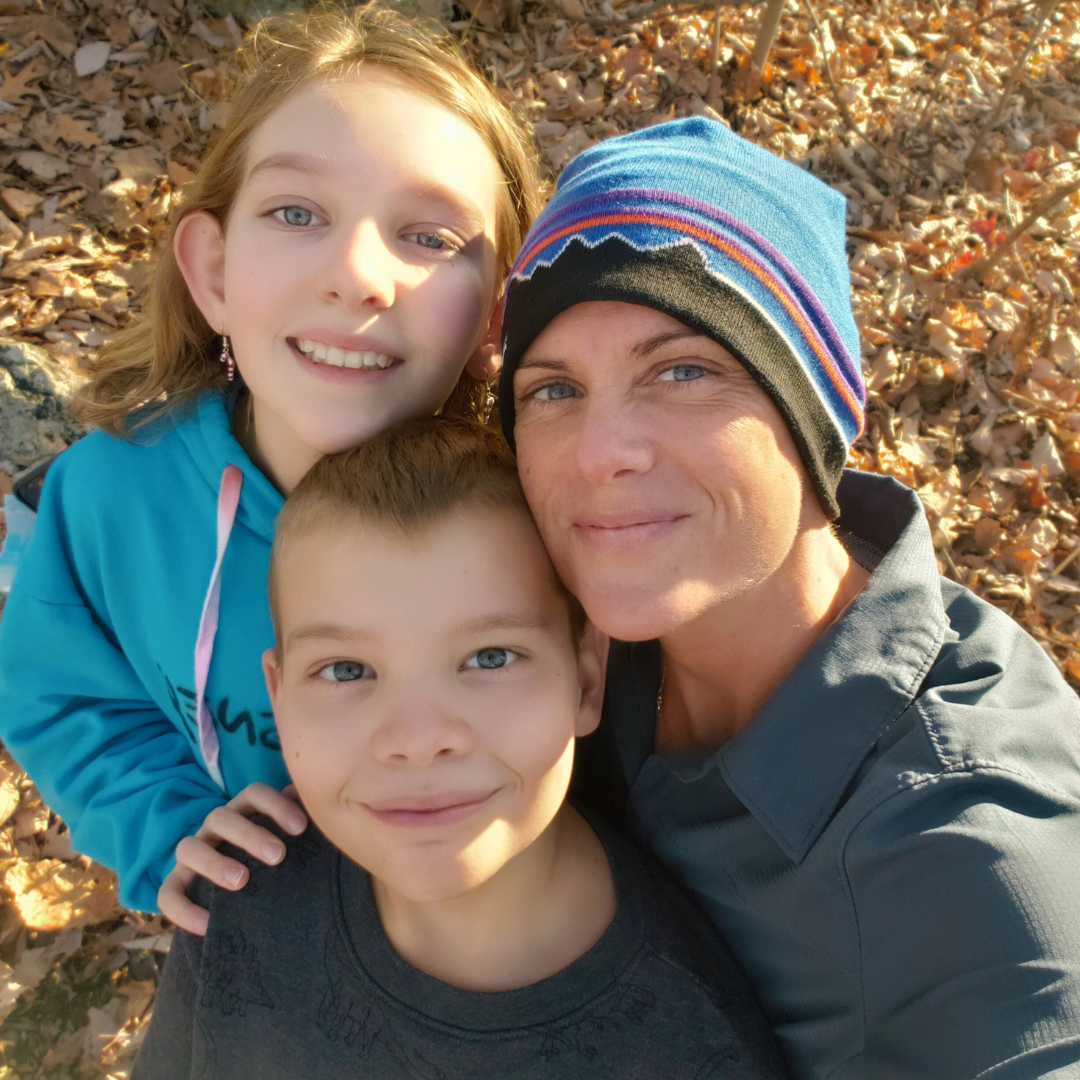
Whenever I encounter someone with a clear message, I’m always interested in where they got it, and how it has impacted their own life. I don’t want to buy a program. I want to hear the juicy details and meaningful takeaways from real experiences.
With that in mind, I couldn’t possibly put the ideas of the project out into the world, without first telling you my story. And so, without further ado, here is my story, and how The Wellbeing Project came to be.
This is also episode one of the project’s podcast. You can listen on your favorite platform.
I was born the fourth of six kids, in 1979, in Bridgeport, Connecticut. My dad was a fiery preacher, and my mom was clinically depressed. I have few clear memories of my mom. My dad dominates the scenes I do remember.
In his book The Road Less Traveled, M. Scott Peck writes,
“Frequently… the essence of a patient’s childhood and hence the essence of a patient’s worldview is captured in the ‘earliest memory.’ It is probable these first memories… are remembered precisely because they accurately symbolize the nature of the person’s early childhood… The flavor of these earliest memories is so frequently the same as that of the patient’s deepest feelings about existence.”
In my earliest memory, I was probably two years old. I am sitting in my highchair in the kitchen, and what appears to be an enormous spoon (probably a tablespoon, but I was a baby) is coming at my face. I feel panic and desperation; my body is rigid with resistance, but I am buckled in and have no option but to let the spoon be forced into my mouth. Cod liver oil.
For years, I thought it was amusing that I could see and feel my baby self’s perspective. I chuckled at the baby revulsion to the taste of fish oil. It wasn’t until I read Peck’s writing that I realized the significance. It wasn’t just revulsion at the taste; it was the terror of being trapped and forcibly entered. Any health benefits that cod liver oil contained were far outweighed by the indelible experience of being overpowered and invaded.
My father’s intentions were sincere, but his methods were often destructive.
The weight of his personality had a gravitational pull that was difficult for anyone to escape. He said he spoke for God, and as a kid, I wholly believed him.
Money was spent on ministry initiatives while we ate government cheese. When the oil tank was empty and we had no heat, we boiled water to bathe. We frequently moved somewhere new, leaving behind neighborhood friends we’d made.
My parents were often complimented on their well-behaved children. All six of us would be seated nicely in pews when we visited a church. At home, though, there was private pain and anger.
He frequently spanked or whipped us for minor offenses, sometimes for innocent behavior that just frustrated him. Afterward, we were expected to repent of our sins and ask for God’s and his forgiveness. Then he’d pronounce us forgiven and swallow us up in a big hug. We were then expected to have a cheerful attitude — the only fitting response to being forgiven.
By four or five years old, I was his little colleague, traveling around New England, riding shotgun to gatherings where he preached, prayed, and sometimes performed “deliverance ministry.” Exorcising demons from people and property was one of his specialties. Unlike priests with holy water and chanted prayers, my dad was full contact with evil spirits. He raged at them, naming them:
“I’m speaking to you, Spirit of Lust! And to you, Spirit of Rebellion!” He demanded they “Come up and out, in the name of Jesus!” while a tearful individual coughed, convulsed, or writhed on the ground.
He took me with him because I was precocious. I conversed with adults as a peer. I’m sure they found me entertaining.
My sunny personality and easy ability to connect with people helped me survive the emotional jungle of our home but disconnected me from the reality of my deeper emotions.
I feared him and fantasized that he would go on a trip and never return. When I wasn’t thinking about him magically disappearing, I was contemplating running away myself. As an eight or nine-year-old, I took note of particularly clean public bathrooms as part of my ongoing escape planning. Where would I wash myself and brush my teeth? I kept a mental log of places that seemed best.
I have a particularly painful memory from middle school. Like any preteen girl, my body was changing, hormones were in flux, and sensitivity to my peers’ opinions was at its peak. I had a big gap between two protruding front teeth. My hair was stringy, and my clothes were mostly secondhand. I’d learned to engage with adults so early that talking with kids my age felt confusing and difficult. I struggled to fit in. I was being raised to obsess about sin and salvation and saving the lost while being discouraged from trivial concerns like appearance or popularity.
On this occasion, my father and I sat facing one another on the picnic bench we used for kitchen seating. I was in tears, trying to find words for a deep inner conflict. I wanted to be cool and normal, but I felt such pressure to be a zealous believer, indifferent to the opinions of worldly people. Finally, after trying hard to articulate my feelings, I simply blurted out, “I don’t want to be good!”
His bald head flushed red. All two hundred and eighty pounds of him lunged at me, his fists flying at my head. Stunned, I tried to duck and protect myself. He stopped himself after a couple of blows, I think, but I don’t remember anything more from that day. Factually, a massive, angry man pounded the head of a crying preteen girl. This man was also the person who told me every single day that he loved me. He’s probably the only person who actually told me that for most of my life.
It was twenty-five more years before I would fully understand how confused and distorted my expectations of intimate relationships were.
That experience reinforced a belief that I could not be integrated and whole. I had different compartments from which I had to live at different times. Being a faithful believer required being rejected by peers. Being accepted by peers required hiding my faith. Both felt miserable, and so I grew more distant from my real self. In trying to be accepted anywhere, I felt isolated, always prepared for rejection.
Another day around that time, my closest childhood friend and I sat on the concrete steps of the multi-unit house my family lived in. She confided that she’d had sex with a boy in our class. I remember looking down at the frayed edge of my cut-off jean shorts. I silently raged at the other classmate, feeling protective of my friend. I felt small and young and aware that our conversation was more grown-up than we were. I remember knowing that neither of us would tell an adult.
Before long, her parents moved her from our public inner-city school to a private one in the suburbs. Our paths drifted apart and back through our teen years. There were more stories she confided that ignited anger and protectiveness in me. We didn’t have adequate language for the complicated situations and unexpected perils of adolescence. Her world was so different from mine. She was beautiful, and talented, and hung out with cool kids. I was awkward. My family was extremely religious and usually broke. I was preoccupied with deep questions other kids didn’t care about. I was friendly and outgoing but still uncomfortable with kids my age.
In my sophomore year of high school, I fell in love with an eighteen-year-old drug addict.
When he broke up with me after a few months and then went missing, I was devastated. Just as I was poised to tumble down my own toxic spiral, I had a life-changing experience. With my church youth group, I attended a weekend convention called “Acquire the Fire” — two days of pounding music, pyrotechnics, and preaching. It was a dramatic answer to my struggle between being cool and devout. Here, I could be both.
My newly stoked, fiery faith consumed me. I started the first Bible club in a public high school in Connecticut and became a leader in my youth group. The next summer, I went on a mission trip to Venezuela. I encouraged other kids to go abroad as missionaries and helped raise money for them. At church, I was frequently given a microphone and tasked with exhorting congregants to show their commitment in the collection plate. I paced the stage, passionate and compelling as I preached.
After graduating from high school, I interned for the organization behind both the youth convention I’d been radicalized at and the overseas mission trips I’d participated in.
As interns, we worked full-time jobs, running a multimillion-dollar enterprise. I worked in marketing, in a large call center where we promoted massive domestic youth conferences and international trips. My day revolved around strict call quotas and “commits.” We studied the Bible, held accountability groups, and often traveled as a road crew for the conventions on weekends. We worked non-stop and slept very little.
We were soldiers.
We got up before dawn and exercised, chanting scripture in the darkness while running. We fasted regularly, crawled through mud, slept outdoors, and role-played dire scenarios among hostile people. One time, we were awakened in the middle of the night, assembled in the gymnasium, blindfolded, driven hours away, and then dropped off with nothing but a six-foot wooden cross to carry and four quarters. We were told to make our way back by faith. We ate it up. We were paying to be there. We were radicalized youth who considered ourselves the special forces of heaven.
I shared the passion and dedication of my cohort, but I began questioning some of what we were told. I saw the numbers game in my day job. Everything was described in terms of “saving the lost,” but my work mostly involved baptized sales pitches. We needed vast numbers of attendees for the organization to stay afloat, and I could see the business model driving much of what we interns did in good faith. It didn’t feel like the life Jesus demonstrated.
That year, I had two overseas experiences that left a lasting impression.
The first was on a trip to a Muslim nation. It was illegal to proselytize there, so we were undercover. We claimed to be exchange students and stayed in the homes of local families.
I was hosted by a family whose head was part of the government. They were warm, welcoming, and generous. I will never forget their hospitality. But rather than entering their home as a gracious guest, I came with an agenda. Instead of engaging openly, every interaction was part of a strategy to hook interest or advance my message. Deep down, I wasn’t comfortable with it. But I wasn’t very good at understanding myself deeply yet.
The second experience was in Bosnia. It was a few years after the civil war had officially ended, but there was gunfire every night. U.N. peacekeeping forces patrolled by day. We spent time in a city divided in half by military checkpoints — Christians on one side, Muslims on the other. Different currency was used on either side. We hid under tarps in the back of pickup trucks to cross from one territory to another. There wasn’t a building that didn’t bear the devastating scars of war.
I talked to weary souls who couldn’t have cared less about my cheerful gospel.
I observed the catastrophic impact of religious clashes. I couldn’t ignore the gruesome absurdity of it all.
After interning, I left East Texas for East Tennessee and enrolled at a small Christian liberal arts school just north of Chattanooga. It was a lovely campus full of caring professors, and I was lucky to be there. But I struggled with the change of pace. I had a chip on my shoulder toward students who seemed content to enjoy campus life. I didn’t know how to be less intense, and I was judgmental of those who could.
My parents weren’t involved in my life like other students’ parents were. My mom had finally left my dad while I was away that first year. She was restarting her own life and finishing child-rearing with my younger sister and brother. My father was immersed in the tiny church he pastored that none of us had ever attended. I was putting myself through school, waiting tables, and working on campus for different professors. I kept up the manic schedule I’d learned as a missionary intern.
During my first semester, I worked at a steakhouse in Chattanooga. One night, I found a sweet note on my windshield from one of the guys I worked with. I called him, and we went out to dinner. We started dating. It was a sweet relationship, but I had been taught that dating for fun was sinful. Romance was dangerous unless it was a careful courtship leading directly to marriage. “Don’t fall in love!” I’d been told repeatedly as a missionary. “Falling in love is for people with no purpose. Arrange your own marriage to support your calling.” Of course, as a woman, my calling was most likely to support a man’s calling.
One day, within a few months of us getting together, I asked him, “Where do you see this relationship going?”
“I have no idea,” he answered. I ended the relationship and walked out. He was the only guy I dated in college.
I majored in Communications, then switched to Psychology. I powered through semesters with enormous course loads, earning grades just high enough to keep my scholarships.
Just before spring break of my sophomore year, I had an idea to go to London. My childhood friend was there for a semester interning for a member of Parliament. I managed to get a last-minute ticket and flew over on my first solo international trip. One evening, over drinks in their flat, one of her roommates mentioned that she had warned them I was “a little weird.” “You’re not, though; you’re really cool!” she said. I shriveled up inside, imagining a prior cautionary discussion of me.
Early one morning at the start of my senior year, I was lightheartedly emailing a friend I’d made in London. He shot an immediate reply: “Turn on your TV.” Startled, I ran down to a neighboring apartment and asked to turn on their TV. We watched the chaos of 9/11 unfolding. When the plane hit the Pentagon, I ran back to my apartment to use the bathroom. I sat there thinking, “What is today’s date? September eleventh? This is going to be one of those dates.”
For the rest of the semester, one adjunct instructor used every class to decry Muslims.
I was pretty sure he’d never actually met a Muslim.
Good people all around me were advocating for the same atrocities I’d witnessed in Bosnia. Because the fighting wasn’t in their neighborhoods, it seemed righteous to them. I felt alienated and trapped by that perspective everywhere I turned.
I couldn’t wait to escape, but I had no idea what to do next. Part of me wanted to continue in graduate school and get a PhD in Psychology; another part wanted to go to seminary and get a Master of Divinity. Mostly, I wanted initials next to my name to prove that I was worth listening to. But I was becoming jaded by religious institutions, and I didn’t have the patience for academia.
I decided to move to London.
Within four days of walking in cap and gown, I was living abroad. It was my first experience truly on my own in the “real world,” the first time I was not wholly inside a religious institution. I found a good job that led to a working visa. I joined a church, made amazing friends, and had a good life.
My time in London was the first experience where my social group matched my conversations and interests. Until this point, I’d felt awkward with my peers. On the surface, I could make friends and fit in, but I was always on edge, anxiously working hard to appear normal. In London, though, I found kindred friendships.
It was also the first time I realized people considered me attractive. In my head, I was still the middle school girl with buck teeth and an embarrassing wardrobe. Early experiences shape consciousness in ways we can rarely grasp. Often, I felt like such an old soul and didn’t fully understand how different I appeared to others. I’ve come to understand that many people inhabit an inner world that looks remarkably different from the image projected by their physical features.
The church I attended was a giant social ecosystem. Young professionals from around the world found their way into its impressively organized small group scene. We met weekly in various homes and pubs, took regular weekend trips together, and became embedded in one another’s lives. Truly, it was a golden age for me. I had no idea what I was experiencing was so special and rare.
I’d never experienced a pleasant life before.
My whole childhood was a fraught cycle of upheaval. My choices so far had perpetuated intensity — religious extremism, heavy course loads, and work in college. Despite loving my life in London, I couldn’t fully accept it. Relaxing into the friendships and activities felt irresponsible. I was plagued by the idea that I needed to find my true purpose and begin making a difference in the world.
An Australian friend had moved home and suggested I explore Down Under. So I moved to Melbourne. Just after arriving, a reality TV show that was filming locally held an open call. Early one morning, I joined seven hundred other applicants and was eventually hired with twenty-two others. The premise was a restaurateur competition between five couples. They built a concept, and we staffed it. I was new in town and had few connections. I threw myself into it.
Hospitality is stressful work. Add camera crews, sneaky producers, a confessional booth for snarky critiques, surprise challenges, a panel of judges, and a voting audience… things get intense. With all the hours I was working, I was quickly on the verge of burnout. But I had been for years — I didn’t know any other way to live.
Most evenings, when the restaurant closed and filming ended, several of us would head somewhere nearby for knock-off drinks. One night, we were in a smaller room off the main area of a nightclub. The lighting was low, smoke filled the air, and music made everything vibrate. I looked around at each person and tried to imagine talking about church with them. It felt absurd. As I had most of my life, I started chatting to God. “Why is it that talking about church feels so irrelevant here, but love — perfect love — is relevant to every single person? If you are love, why is there a huge gap between the concept of your love and church?”
After a few minutes, I concluded, “Whatever that gap is, that is where I want to live my life.”
It wasn’t a big pronouncement, just a reflection based on the moment. But I have never been able to be a meaningful part of a church congregation since.
When the show wrapped, I was utterly spent. After a few weeks of deliberating next steps, I got on a plane and headed back to the U.S. Eventually, I settled in New York City, working as a sales rep for a global company that supplied mailing and shipping infrastructure. It was a whole new world to explore. Each day found me inside offices, galleries, studios, showrooms, and warehouses of every size and from every industry. The learning curve was steep, and I was slow to scale it. But eventually, I found my rhythm and excelled.
Despite finding success, I burned out again. Of course.
My search for purpose left me repeatedly hitting brick walls. My mental health fluctuated as I swung between extreme ambition and despairing confusion. I decided to leave Manhattan and move to my mother’s suburban basement. I needed to regroup.
It felt humiliating after all my travels and close calls with success. There was one glimmer of hope, though. My childhood friend had also burned out and moved to her parents’ home. We would finally reconnect and maybe reimagine our lives together.
After college, she had gone to work in network news. She’d become a producer for a popular daily program. Over the years, we’d drifted apart and back. Sometimes I would wake during the night alarmed, having dreamt that she was in trouble. I would wonder if she was okay and pray for her safety.
But whenever I visited her, she appeared to be crushing it. She was still beautiful, and now successful.
Who was I to help her when I wasn’t nearly as accomplished?
I’d always felt an urge to rescue her, but from what? I’d been too intimidated to try to figure it out. Years of anxiety about our friendship seemed soon to be resolved. I wasn’t in a position to offer guidance, of course, but I did feel like I was ready to tell her how much I cared and how concerned I’d always been. I knew her impressive exterior hid pain and confusion.
The weekend I was moving out of my apartment on the Upper West Side, she overdosed in an apartment on the East Side.
Losing someone you love is one of life’s most devastating experiences.
It happened right when I was facing my own sense of being lost and as I worked up the courage to attend to longstanding insecurities. I’d believed we were both poised for growth.
I was wrecked. I felt anguish about the conversations that would never happen, the possibilities that would never materialize. The courage I’d mustered to speak up despite my self-doubt evaporated.
That year, I lived close to the edge myself.
I swung between high hopes and heroic entrepreneurial schemes and suicidal fantasies. By the end of the year, I’d had enough. I was ready for a new chapter. I can’t say I’d actually worked anything out. I just got tired of being lost and decided to leave my mom’s, pick a new place, and start over.
The next day, I met a guy.
Seventeen days later, I married him. What could possibly go wrong?
He was an alumnus of the missions organization I had interned with a decade earlier. Though I’d distanced myself from much of that chapter, it was comforting to meet someone who shared my spiritual ambition. He was instantly familiar. I thought he was what I’d been missing — a man who would make me feel legitimate. It felt like a miracle.
For at least six weeks. And then scary things started to happen. Little by little, I saw a dark side of my new husband. For the next five years, I navigated life trying to enjoy his wonderful, poetic, spiritual side while recovering from his occasional dark side. It was a classic cycle. But, like my childhood, it was mostly unseen by others: patriarchal, controlling, and all wrapped up in religious language. Sometimes I felt desperate and helpless; other times, I raged with indignity.
Mostly, though, I convinced myself that we were fine and would make it through our rough patches.
I couldn’t admit to myself how bad it was. I couldn’t bear the thought of losing the first title that had made my life feel purposeful: wife. When our two children were born, I’d been baptized into a profound new sense of purpose. “Mother” was the identity I cherished the most.
But one day, I asked myself, “If my daughter was grown and in this relationship, what advice would I give her?” I knew I couldn’t stay. I couldn’t model something I would never want for her.
I wish I could say that gathering my courage and moving out was the beginning of my healing. Perhaps it was. But the worst was still to come.
I moved to a small rented bedroom down the street from our apartment. To me, it seemed the easiest way to split without taking the kids somewhere else and getting lawyers involved. My husband had been a good dad, I reasoned; it was just me I needed to protect. I thought my move would be a line in the sand. Each morning, I came back and did all the things I always had. I cared for our little ones, did the laundry, packed his lunches, and coordinated all the things a family and home require. Late each evening, when he returned, I went back to my little room.
One night, just after discussing the morning plans and the kids’ pediatrician appointment with him, I returned to my room. While I lay in bed, my cell phone rang. Two on-call social workers were responding to a child abuse report that had just been filed. After I left, he had fired up the computer and submitted his claims, triggering an emergency response from Child Protective Services. I needed to meet them immediately.
He claimed that I was violent toward the children and that he feared for his and their safety.
He also claimed that I had abandoned the family. He’d emptied our joint bank accounts. He requested a restraining order. Although it was never granted, he got a protective order, which meant I’d be arrested if he felt threatened by me. He taunted me any chance he got, but if I replied, he would say, “Are you raising your voice to me? Do I need to call the police?” It was absurd. But it was also terrifying.
For a year and a half, the kids lived primarily with him. He hired a nanny. I was still able to come every day, but I was treated suspiciously. He had the nanny observe and report on everything I did.
I got a job at Trader Joe’s, too shattered for anything more.
The first time I went before a judge in our custody case, she eyed the stack of his allegations and told me I didn’t stand a chance.
She recommended I let him have custody and see the kids every other weekend. Outside the courtroom, I asked my lawyer, “Is it possible to lose custody, not because I’ve done something wrong, but because I can’t afford the legal costs to prove my innocence?”
“Absolutely, it happens all the time,” he replied matter-of-factly.
It felt like a walking death to live without raising my babies.
Violating such a primal bond can shatter your sanity. I wanted out of my marriage and the twisted beliefs that had led me to cling to it. But the horror of losing my children obliterated my ideas of how life worked. How could I find meaning and purpose in a world so cruel?
Eighteen months and many desperate moments later, we had our day in court — three days, in fact — testifying to our own parenting competence.
For what seemed like endless hours, I was questioned by a creepy lawyer who enjoyed humiliating me.
I glowed with shame, but even more with the desperate realization that the legal system was a strange sport where unsympathetic strangers tossed and kicked the details of your life until one side achieved the final goal. I was beyond grateful to have a different attorney than I’d first retained, one who genuinely cared. Nevertheless, being stuck in litigation was a torture I could barely believe was real.
The decision came weeks after the trial. The kids were with me the day it was published. Their dad was scheduled to pick them up. Instead, he sent a text: “You got them.”
It was a bit like surviving an apocalypse.
Once the dust settles, a brave new world awaits. Ending my marriage had caused me to face many of the dynamics from my childhood. It had given me the opportunity to refuse what I could not refuse as a kid. Any shred of obligation to a religious institution was gone. The most religious people and organizations in my life had been the most abusive, and I no longer cared to wear the same label.
I never doubted my connection to God. It was the only explanation I had for why I was still alive. But I knew God was not the male deity at the top of a religious system.
My escape from that worldview had liberated God too. Our connection would never again be governed or interpreted by anyone else.
The next several years were full of new petitions and appeals, mostly filed by my ex. Case after case, before several judges. The courthouse child care center became a favorite place for the kids. They painted, played, and took naps while I churned through the meat grinder of family court.
We started each day with a wrestling match and cuddles.
I dreamed up ways to make a difference in the world but always maxed out my energy before I got very far. I pieced together side hustles. I waited tables and worked in a health club.
Four years after splitting with my ex, my college boyfriend and I reconnected. We were both single parents, both attracted to the idea of teaming up. He and his daughter were in Chattanooga, Tennessee. I wasn’t looking for profound romance as much as I was for respect. We made few promises except to do our best and never intentionally hurt one another.
I petitioned the courts to move. Every lawyer I consulted told me it would never be granted. But it was. A judge ruled that enough was enough and that it would be in the kids’ best interest to go far, far away.
So we moved South, full of expectations for a new life as a new blended family.
He and I got married.
I was tired of hospitality side hustles, but not yet free to pursue full-time vocational ambitions. So I took a job with the American Red Cross, teaching CPR and first aid classes.
In past professional lives, I’d always excelled in roles where I could communicate ideas, inspire, motivate, and build relationships. I enjoyed being in any position where I could teach something valuable.
From the moment I started instructing life-saving skills classes, I became obsessed with the idea that we teach people to save bodies in emergencies, but no one teaches us how to save a being in an emergency.
We’re never taught how to practically navigate the traumas of life when it doesn’t involve medical knowledge.
Years earlier, I’d found myself scrolling Facebook on a Sunday when the kids were with their dad. The playwright Stephen Adly Guirgis posted that the theater company he led with the actor Philip Seymour Hoffman was performing a series of public readings. I looked at the clock and saw I could catch a train in time.
I arrived and found a seat in the tiny black-box theater. While three actors read the script for This is Our Youth, I couldn’t stop awkwardly catching the eye of a guy seated across from me. It was Philip Seymour Hoffman. I wasn’t meaning to stare at him, but our seats were directly facing each other.
When the performance ended and the lights came up, people stood to move around before the next reading. He walked straight toward me, stopped a few feet away, and began chatting with two attendees.
I was trying to decide whether to stay for the next reading, when he turned toward me, raised his voice, and said, “If anybody needs me, I’ll be right here.”
I froze. Was he inviting me to approach him?
It felt like he was. What would I say? Suddenly overcome with insecurity, I got up and left without acknowledging him.
When the news of his overdose erupted in February the next year, I felt anguish. I didn’t know him, but I could easily imagine a scenario where I did. I felt like I had been invited to connect but had rejected the invitation because I feared being rejected. I’d compared his status with mine and decided against it.
I don’t think I could have saved his life. I don’t think I could have healed his addiction. I don’t think I am a savior.
It just felt like one more time that I had let insecurity prevent me from connecting meaningfully with someone else.
The truth is, I have always connected easily with others. Near-perfect strangers have consistently chosen to confide in me. It feels both surprising and also absolutely natural. I’ve only ever really cared about making sense of life and trying to help others.
But every time I started to feel like things made sense, I’d been sideswiped by my own inner chaos. It wasn’t possible to help others until I’d figured out my own path. I had so much to untangle.
It is unlikely that at any point, had you met me, you would have imagined I was experiencing the fear, anxiety, insecurity, loneliness, or sadness that I was.
Even when I was suicidal, you would have met a vibrant, possibly somewhat high-voltage personality.
Others perceived me to be outgoing and enthusiastic, prone to inappropriate jokes, an articulate communicator, a fearless advocate for others, someone quite willing to speak truth to power. But I had always also been a little girl desperate for affection, hungry for belonging, and fearful of rejection.
I often didn’t even know exactly what was happening inside me.
I felt emotions powerfully but usually misattributed the reasons. As a child, I learned to ignore my emotions until I could no longer interpret them. I always had a reasonable explanation, but in reality, I didn’t actually have a clue why I did many of the things I did.
It took the traumas I experienced as an adult to finally shake me free from patterns so ingrained I thought they were who I was. I’ve since learned to care for the being within, and my soul has unkinked with time.
When I look around, I see others who need guidance, encouragement, and support to do the same.
I see individuals disconnected from themselves, isolated, lacking direction, or anxiety-ridden about the world around them. I see individuals in quiet crises: divorce, loss of a loved one, bankruptcy, processing a scary medical diagnosis…
I have never seen a clear explanation for what to do when life goes up in flames.
Every day we interact with people trying to survive crippling crises, but they have to pretend to be fine so they can keep their jobs, their families, or their fragile sanity.
And so many of life’s emergencies are the result of ignorance. We don’t know what we don’t know, and so we stumble into crises that could have been avoided.
I had long since shed a belief system that compelled me to convert others to my worldview. I only wished to offer what I had: my passion and the experience that comes from dealing with difficulty. I wanted to dedicate myself to what we all have in common, regardless of gender, ethnicity, religious persuasion, or socioeconomic status. I wanted to help others find the one thing we all truly want: well-being.
All of humanity’s most profound messages have been straightforward.
All the prophets and teachers we have looked to for wisdom taught lessons that were both simple and practical. I wanted to take a jackhammer to the dogma surrounding central truths. I wanted to distill what mattered and discard the rest.
While I taught for the Red Cross, I spent months putting together the information and ideas I wanted to communicate. Then I took those ideas and taught them for a year in our local jail. My class was full of participants from all kinds of backgrounds. Most were violent offenders — murderers, rapists, pedophiles — awaiting trials or sentencing. I spent an evening each week discussing and re-examining the content I had compiled. Our conversations continued to reshape my thoughts.
For years I had burned with a deep desire to stand up and offer a message of hope and meaning to others.
At the same time, I burned equally with fear and worry about what others would think of me. I didn’t belong to a group or community. I expected rejection. Who was I to offer answers? Wasn’t I just a girl with no real career? A single mom who always seemed on the verge of tears? Why should anyone listen to me?
But each week in my class at the jail, I saw other beings who craved the chance to talk about and understand their lives. They wanted a different future but had little idea of how to break from their past.
Having the conversations we had was a profound experience. I felt guilty for the times I had held back or been ambivalent. Why had I cared so much about what I looked like to others? Why did it matter what my career had or hadn’t been?
The world is full of people who need to be seen, heard, and held.
All my life I had known I had to be involved in the work of healing and helping others. But I had doubted myself and been consumed by the loneliness of my quest.
When the pandemic interrupted the world in 2020, I made another discovery.
My second husband and I had achieved all we could together. We’d teamed up as struggling solo parents, we’d blended our family, and we’d become better versions of ourselves. But our new versions wanted different futures, and we had the maturity to accept that.
I refused to call it a failed marriage. I knew better than to let anyone else interpret my story. I was grateful for all our relationship had brought, including a passport out of a life of litigation. I knew that longevity is not the measure of success. Although there was pain, we parted with grace.
Through every chapter of my life, this fervor has remained. A few years ago, I was catching up with an old friend from London with whom I had been a church leader. We were discussing my beliefs now and how they have changed. He said, “Rach, years ago you once said you felt like the prophet Jeremiah with fire pent up in your bones. Do you still feel that way?” Tears rose at the edges of my eyes. The answer has always been yes.
I created The WellBeing Project, not because I am a shining example of perfection, but because I am a fellow traveler on this extraordinary path of being human.
Well-being is not a destination. It is not a permanent state of bliss or otherworldly flawlessness. Well-being comes with understanding our real nature and enabling it to flourish. Knowledge, put into practice, empowers us to weather the storms we inevitably face. Meaningful connections with allies who share this knowledge and practice keep us growing forward.
Well-being is possible in tragedy, in crisis, in change, in facing our demons, and in confronting our fears. Well-being is the practice that allows us to live in hope and eliminate despair. Well-being is the unfolding, the unfurling of your uniqueness and potential, and that of all humankind.
My quest has always involved questions like, “How do we create lasting change? Real change that shifts the course of history?”
Millions of people feel despair when they observe the world around them, and many feel helpless about how to make a difference.
There must be a way to mobilize powerfully in a sustainable way.
Well-being — a flourishing existence — is the central motivation we all share. Until now, we’ve all had to define for ourselves how to achieve it, and very few have done so. We constantly fail at predicting what will bring us lasting fulfillment. The world is full of tragic proof that the things we thought would bring well-being don’t.
Many who achieve standard definitions of success (wealth, status, power) are found dead from unrecognized psychological starvation.
Many at the lowest socioeconomic levels live vulnerable to physical and medical deprivation.
And many in between live on a swinging pendulum of anger and apathy; dying for hope, surviving on fear.
The answers we’re offered perpetuate the state we’re in. Distraction and consumption are the standard prescriptions that neutralize our capacity to grow and quietly destroy our potential.
For ages progress has depended on the activists in our societies.
The small minority of individuals whose conviction compels them to confront power and shift thinking. But there is a reason it has always been a small percentage of the population willing to take on such noble missions. Activism is all-consuming. It is willing self-sacrifice. It goes against our human nature. Few are willing to pay the price.
But when most of the population agrees, anything can be changed.
That is one reason I wanted to dedicate my energy speaking to what we all share, regardless of our ideological persuasion.
Changing the world starts with understanding your own existence.
Once we understand the universal principles that lead to well-being, we can navigate better and ultimately master what once seemed to elude us. And that is the secret to changing the world. Because the world is really just a giant crowd of people like you, all trying to figure out the same things. And if you get it, you can spread the word almost effortlessly. Who you become is the message. How you behave is the message. How you see others is the message.
In the concepts of the WellBeing Project, I offer a practical path for shifting the future from a sense of impending doom to a beautiful, expansive one. If you apply the concepts to your own life, you will experience a transformed reality, beautiful and expansive. And once you experience that, you will know that the future can be radically changed, without angry partisan politics or self-sacrificing activism.
The answer to our ultimate questions, the secret to achieving well-being, is not working harder.
It’s not even working smarter. It is simply not about work. It’s a fundamental shift in how we perceive ourselves and navigate in the world.
I wish that someone had shared these concepts with me when I was stepping into adulthood. It would have altered the course of my life.
Some people had loving, attentive parents who created stable environments and gave good advice. I wasn’t one of those. But there’s still hope for those of us who didn’t get ideal nurturing and guidance early on. In fact, it’s often the trauma or distress of life that compels us to seek meaningful answers.
A big theme in my life has been longing for a mentor. I wanted to find someone who would take me under their wing, guide me, and protect me. I never found one specific guru, but I have been blessed with many inspiring individuals who crossed my path at critical moments.
One reason I never found a guru is because I’m skeptical of anyone who needs control. Anyone who suggested trusting their instruction over my own reasoning sent me running. They probably could have spared me some pain when my reasoning was still tangled. But that’s not how life typically works. If you cut the cocoon open, the butterfly won’t be strong enough to fly.
Truth that isn’t found within, isn’t truth. It’s just information.
Instinctively I knew that I wasn’t looking for someone to tell me what to believe or do, but to make a safe space and affirm that I could work it out. I craved a context to safely deal with my shame and confusion, not someone who told me how to think or act. A real mentor does not take the wheel, they ride shotgun for a leg of your drive.
While looking for someone to lead me, I stumbled along, learning by trial and error, through highs and lows, inspiration and heartbreak. That’s usually how things work. We don’t get a permanent guru. The right people cross our paths at the right time. And we grow wiser in the act of searching.
One day we discover that the mentor we sought, is the person we are.
This is my attempt to share my learning with you. But it comes with the disclaimer that you alone are the mentor, leader, guru you seek. Ultimately well-being results from you stepping up to the plate of your own potential. You can do that. I hope to offer what I can, mostly practical proof that it can happen, and some basic guidance that can help.
Conclusion
My story is proof that no matter how lost, broken, or trapped you feel, you can find your way forward. Well-being isn’t about perfection or getting it all right—it’s about learning how to be whole, even in the middle of the mess.
If any of this resonates, if you’ve ever felt like you’re barely holding it together, if you’re longing for something more—you don’t have to do this alone.